WINTER IS COMING: CAN YOU FLY AN EVTOL IN COLD WEATHER?
BY THE RISE VERTICAL TEAM · YIVTOL'S TOP-TIER USA PARTNER · OTTAWA, ILLINOIS
THE SHORT ANSWER
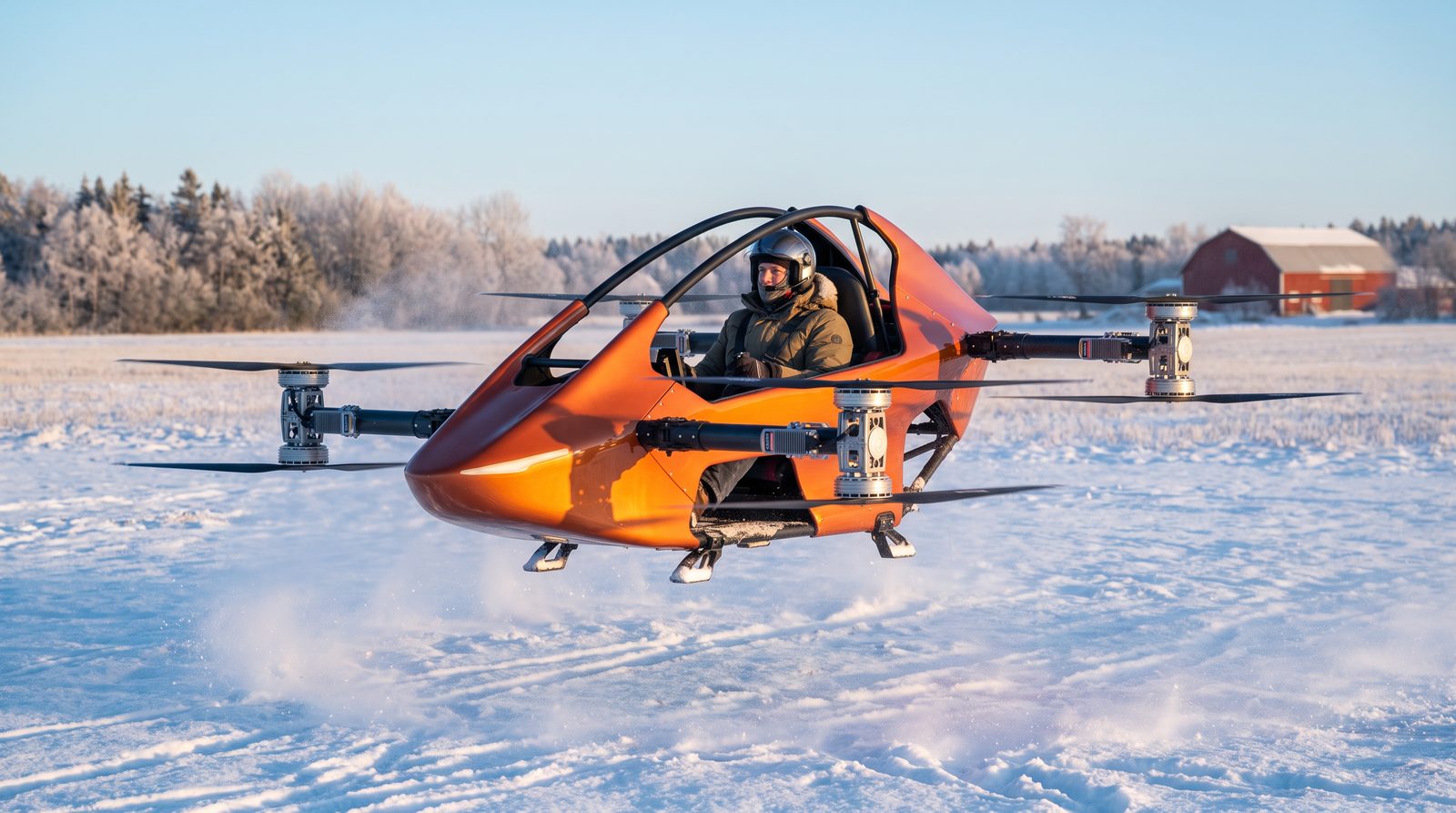
Yes — winter flying is not only possible, it's often excellent. Cold air is denser, and denser air gives rotors more lift and motors an easier day. What winter actually changes is a short list: your battery wants to be warm, you want to be warm, and Part 103's daylight-only rule meets shorter days. Manage those three, store the aircraft like you'd store a snowmobile — clean, dry, indoors — and the season is yours.
THE SURPRISE: COLD AIR IS GOOD AIR
Every pilot learns it early: aircraft perform better in cold air. Air gets denser as it cools, and a denser air mass gives every propeller blade more to push against — more lift per rotation, more efficient hover, crisper response. Electric motors don't mind the cold either; unlike combustion engines, there's no oil to thicken, no carburetor to ice, nothing to pre-heat. On a still, clear January morning, an S-Zero is aerodynamically in its happy place — the machine likes winter more than most pilots do.
THE BATTERY IS THE REAL WINTER STORY
Like every lithium battery — your phone, your power tools, your EV — an eVTOL's pack delivers less of its capacity when it's cold, so expect somewhat shorter flights on freezing days. The habits that keep winter capacity high are simple:
- Charge indoors, always. Room-temperature charging is kinder to the cells — and never charge a pack that's still freezing cold from the shed.
- Fly on a warm pack. Keep the battery inside until it's time to fly; install it warm and launch — you'll keep most of your usual flight time.
- Store around half charge. For longer storage stretches, a moderate charge in a cool-but-not-freezing indoor spot is the standard lithium practice.
- Follow the book. Your aircraft's manual and your factory trainer's guidance beat any blog post — including this one.
DRESS LIKE A SNOWMOBILER, NOT A PILOT
The S-Zero's open cockpit is glorious in June and honest in January. At flying speed, wind chill does what wind chill does — so borrow the playbook from the people who already solved this: snowmobilers. Insulated bibs or a one-piece suit, a windproof shell, proper winter gloves you can still work a joystick with, and a full-face helmet visor instead of goggles that fog. Dress for the ride, and a 20-minute winter flight is comfortable; dress for the driveway, and it's a very short season.
WINTER RULES OF THUMB
- Fly the midday window. Part 103 is daylight-only, and winter days are short — late morning to mid-afternoon gives you the warmest air and the most margin.
- Clear and calm or not at all. Snow showers kill visibility fast, and freezing drizzle is a hard no for any aircraft. Winter flying is a blue-sky sport.
- Respect snowy landing zones. Snow hides ruts, stumps, and wire, and powder disguises soft ground. Land where you know what's underneath, and expect rotor wash to stir up loose snow.
- Give it a longer pre-flight. Cold hands rush checks — don't. After any storage stretch, walk the aircraft slowly: props, connections, control response.
STORING IT FOR THE SEASON
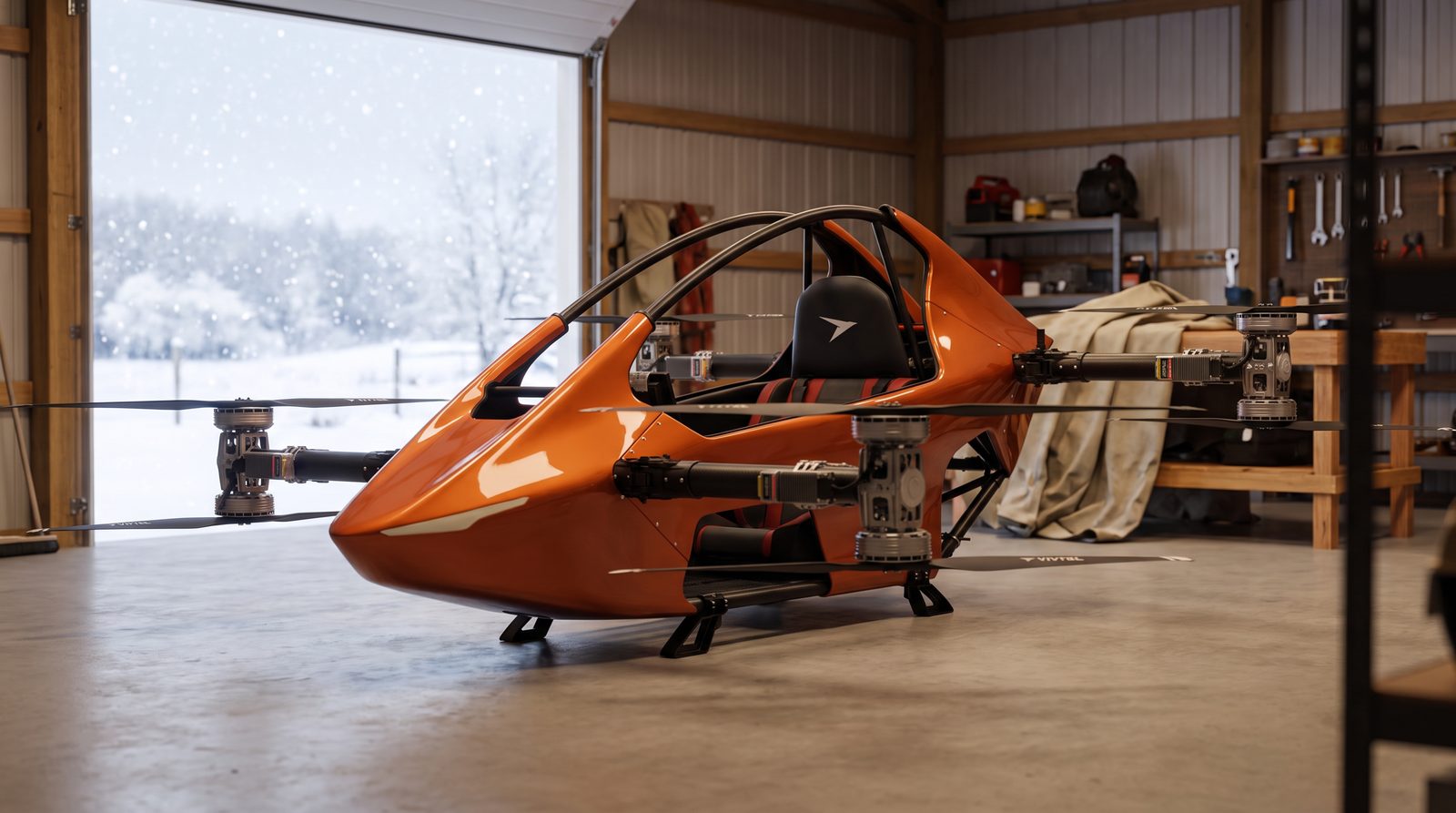
Here's where owning an electric ultralight gets pleasantly boring. There's no fuel to stabilize, no oil to change, no coolant to check — nothing to "winterize" in the old sense. Winter storage is: clean it, dry it, park it in the garage, shed, or barn it already lives in, keep the battery indoors at a moderate charge, and throw a cover over it if the space is dusty. Come spring, give it a thorough pre-flight — and if you want a second set of eyes, that's exactly what our lifetime after-purchase support is for. One call, and we'll walk your spring checkout with you.
THE MIDWEST BONUS: ORDER IN WINTER, FLY AT FIRST THAW
One more winter thought, from experience here in Illinois: the buyers who enjoy spring most are the ones who ordered in winter. An order placed in the cold months means delivery, crate day, and your at-home factory training all line up with the first stretch of good flying weather — instead of spending May watching a calendar. Spring you will thank winter you.
QUICK ANSWERS
Can you fly a personal eVTOL in winter?
Yes. Cold, dry, calm winter days are often excellent flying weather — cold air is denser, which gives propellers and rotors more lift. The practical limits are battery temperature, pilot exposure in an open cockpit, and Part 103's daylight-only rule meeting shorter winter days.
Does cold weather reduce eVTOL flight time?
Expect somewhat shorter flight times on freezing days — lithium batteries deliver less usable capacity when cold. Storing and charging the battery indoors at room temperature, and flying soon after installing a warm pack, keeps most of that capacity.
Can an eVTOL be stored in an unheated garage or barn?
The airframe is happy in a clean, dry garage, shed, or barn — no hangar required. The battery is the exception: it prefers indoor, moderate temperatures for storage and should always be charged indoors, following the manufacturer's guidance.
Can you fly over snow?
Yes, and it's spectacular — but treat snowy landing zones with respect: snow hides ruts, stumps, and fence wire, and deep powder conceals how solid the surface is. Land where you know the ground, and remember rotor wash will kick up loose snow on takeoff and landing.
Do you need to winterize a personal eVTOL?
There's no engine oil, coolant, or fuel system to winterize — one of the perks of electric. Winter prep is mostly: store it clean and dry, keep the battery indoors at a moderate charge, and give the aircraft a careful pre-flight after any long storage stretch.
Is winter a good time to order an eVTOL?
It's arguably the best time. Ordering in winter means your aircraft, delivery, and at-home training all line up with the first good flying weather of spring — spring you will thank winter you.
General information as of September 2026, not flight instruction or legal advice. Always follow the aircraft manual, your factory training, and current FAA regulations — and when in doubt about conditions, don't fly. Battery-care practices described are general lithium-battery guidance; your manufacturer's instructions take precedence.