WHAT TRAINING DAY ACTUALLY LOOKS LIKE: YOUR FIRST EVTOL FLIGHT, STEP BY STEP
BY THE RISE VERTICAL TEAM · YIVTOL'S TOP-TIER USA PARTNER · OTTAWA, ILLINOIS
THE SHORT ANSWER
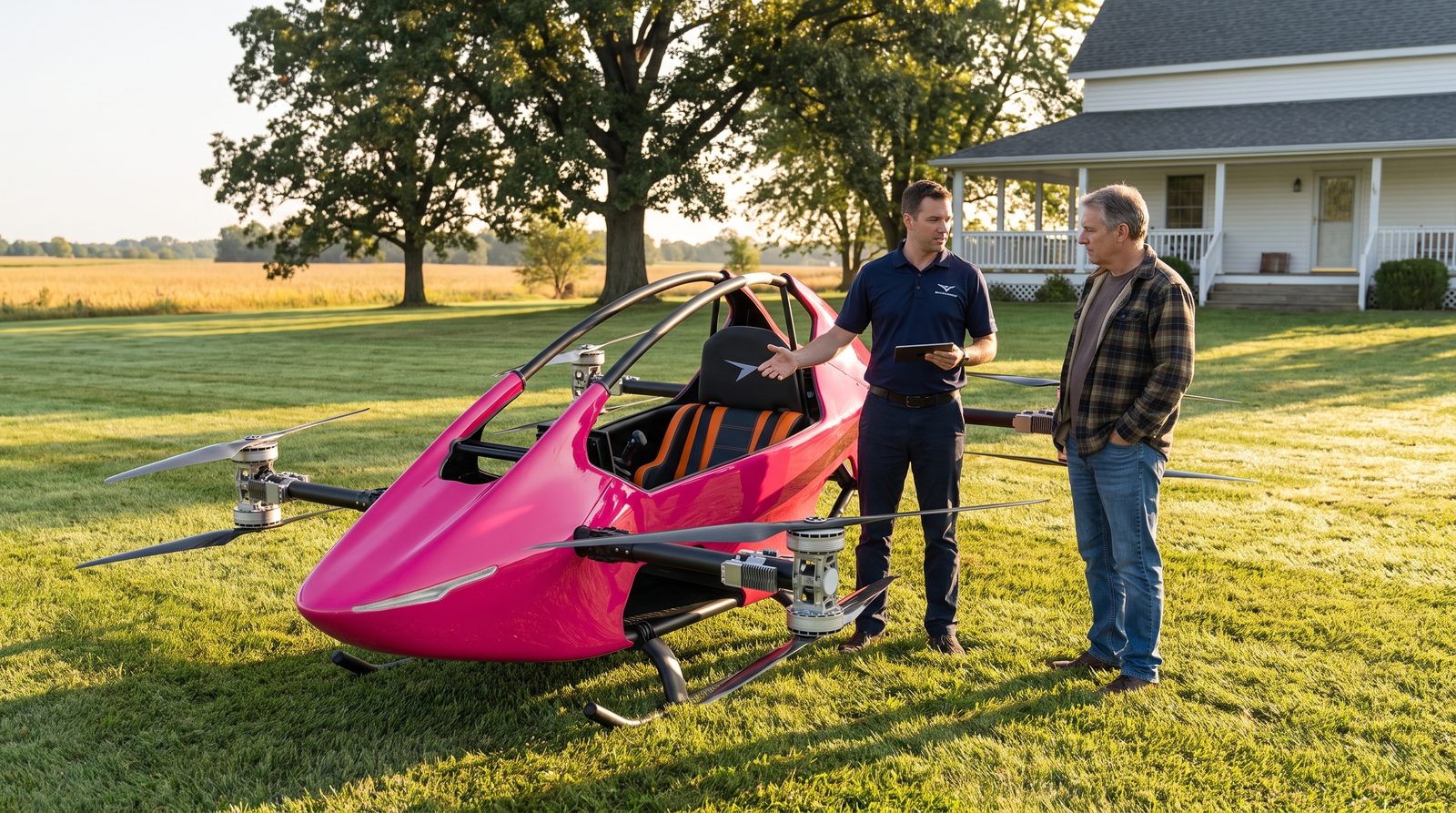
Training is included with every S-Zero, and it happens at your home. A factory test pilot — someone who flies this aircraft for a living — comes to your property and spends the day with you: a full systems walkthrough, the pre-flight routine, joystick practice on the ground, and then short coached hovers that build into your first real flights, all on your own aircraft, over your own land. No flight school, no classroom, no travel.
FIRST, EVERYTHING YOU DON'T DO
Ask most people what learning to fly looks like and they'll describe a second job: drive to an airport, rent a trainer aircraft, sit in a classroom, log hours for months. Buying an S-Zero deletes that entire picture. You don't enroll anywhere. You don't travel anywhere. You don't learn on somebody else's machine and then start over on yours. The trainer comes to you — it's the last step of the same white-glove delivery that brought the aircraft to your door.
WHO ACTUALLY SHOWS UP
Not a delivery driver with a manual. Your coach is a factory-trained test pilot — someone whose working week is spent flying the S-Zero, not reading about it. That matters more than it sounds: when you ask "what does it feel like when a gust hits?" or "what do I do if I drift toward the trees?", you get an answer from muscle memory, not from a page. By the time they pull into your driveway, your aircraft has already been delivered, uncrated, and checked — training day starts with a ready-to-fly machine.
THE MORNING: A WALKAROUND YOU'LL REPEAT FOREVER
The day starts slow, on purpose. Before anything spins, you and your trainer walk the aircraft together — and this walkaround becomes the pre-flight habit you'll repeat before every flight you ever make:
- Propellers and airframe. What a healthy prop looks like, what a nick looks like, and the parts of the frame worth a glance every single time.
- The battery routine. Installing and swapping packs, reading charge state, and the charging habits that protect both the battery and your flight time.
- The controls, cold. Sitting in the cockpit with everything off: where your hand rests on the joystick, what each input will do, and how the AI-assisted stability behaves.
- The flying field itself. You walk your own land with a pilot's eyes — wires, slopes, trees, the neighbor's fence line — and pick your takeoff and landing spots.
WHAT THE AI DOES — AND WHAT YOU DO
The honest heart of the ground session is understanding the division of labor. The S-Zero's flight computer handles the part of flying that takes student pilots months to learn: it keeps the aircraft level and stable, holds your hover, and translates small joystick inputs into smooth, bounded movements. You handle judgment — where to fly, when the weather says no, how to read the space around you. Your trainer is blunt about this line, because respecting it is what makes an easy aircraft a safe one. The legal side of that judgment — where ultralights can and can't fly — is covered in our plain-English Part 103 guide.
THE FIRST HOVER
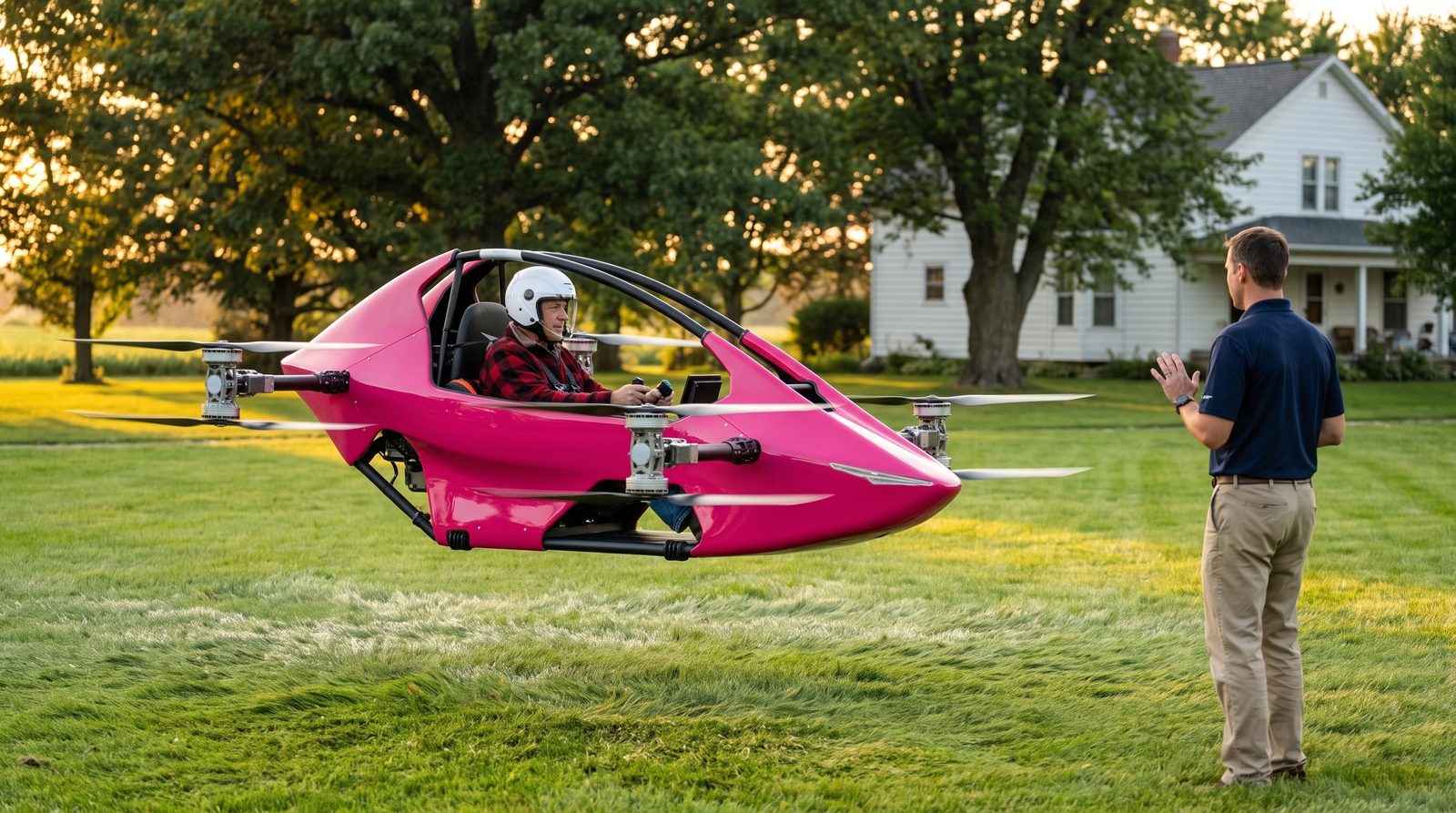
Then comes the moment the whole day is built around. Helmet on, trainer on the grass beside you, and the aircraft rises — a few feet, no more — and just holds there while you feel what "stable" actually means. The first hovers are short and low. Then a little higher. Then gentle movement: forward, back, a slow turn, a landing exactly where you took off. Every step is called by your trainer, and no step happens before you're ready for it. Most owners describe the same arc: thirty seconds of held breath, then the grin that doesn't leave for a week.
BY SUNSET: WHAT YOU'RE LEFT WITH
What you have at the end of training day isn't a logbook entry — it's familiarity. You've flown your aircraft over your land, you've done the pre-flight enough times that your hands know the order, and you know exactly what the machine does when you do nothing at all (it hovers, patiently). And the relationship doesn't end in the driveway: lifetime after-purchase support is part of every package — one call, any question, for as long as you own it.
QUICK ANSWERS
How long does eVTOL training take?
For the S-Zero, training is typically a single day at your own property. A factory test pilot walks you through every system, coaches your first hovers, and builds up from there — the pace is set by you, not by a syllabus.
Is S-Zero training included in the price?
Yes. Every Rise Vertical purchase includes at-home training from a factory test pilot as part of white-glove delivery. It is not an add-on and there is no extra fee.
Do I need any flying experience before training day?
No. The S-Zero flies by joystick with AI-assisted stability and was designed for first-time pilots. Your trainer starts from zero: systems, ground practice, then short coached hovers before anything else.
Where does the training happen?
At your own property — the same place you'll actually fly. You'll want open space away from buildings, trees, wires, and people; your trainer helps you pick the exact spot and walks it with you for hazards.
Do I need a pilot's license before training?
Ultralights do not need a license to be flown in the USA, and that includes training day on your own aircraft. The rules come from FAA Part 103 — our plain-English guide covers exactly what they allow.
What should I have ready for training day?
An open stretch of lawn or field, batteries charged indoors the night before, and a calm, clear-weather window. Dress simply — closed shoes, nothing loose, helmet on — and let your trainer handle the rest.
General information as of October 2026, not flight instruction or legal advice. Training-day structure and pacing are set by your factory trainer and may vary by location, weather, and aircraft configuration. Always follow your trainer's guidance, the aircraft manual, and current FAA regulations.